Wall paneling ideas can turn a plain wall into a strong design feature while adding texture, depth, and architectural character. From classic wainscoting and Shaker panels to modern slats, fluted surfaces, and geometric patterns, there are options for almost every interior style.
The right wall paneling is not only about choosing a pattern that looks attractive. You also need to consider the size of the room, ceiling height, existing furniture, lighting, wall condition, material, and how much visual detail the space can handle. With thoughtful planning, paneling can make a room feel warmer, taller, more sophisticated, or more visually balanced.
Why Wall Paneling Is Popular
Modern wall paneling has moved far beyond traditional woodwork. It can be used as a subtle background behind furniture or as a dramatic floor-to-ceiling feature wall. Vertical panels can emphasize ceiling height, while horizontal boards can make a wall feel wider.
Paneling can also help define different areas within an open-plan home. A textured panel behind a sofa, bed, desk, or television creates a visual anchor without requiring a complete room makeover.
Wall Paneling Ideas for Different Rooms
The best wall paneling ideas depend on how the room is used. A decorative pattern that works well in a formal dining room may feel too busy in a small bedroom, while moisture-resistant panels may be more appropriate for bathrooms.
Living Room Wall Paneling Ideas
The living room is one of the easiest places to introduce wall paneling. A paneled wall behind the sofa, television, fireplace, or shelving can create a natural focal point without filling the room with extra decoration.
For a traditional look, consider picture-frame molding, Shaker panels, or half-wall wainscoting. If your style is more contemporary, vertical slats, fluted panels, or simple full-height designs can provide texture while keeping the room visually clean.
A useful approach is to panel one main wall rather than every surface. This gives the feature enough attention without making the room feel crowded.
Bedroom Wall Paneling Ideas
In a bedroom, paneling can work as a decorative headboard alternative. A full-width paneled wall behind the bed creates a finished backdrop and can help visually frame the sleeping area.
Vertical wood strips, soft-colored Shaker panels, or simple geometric designs can work particularly well. For a calm bedroom, choose muted neutrals, warm wood, soft green, beige, or other colors that complement the bedding rather than competing with it.
Hallway and Staircase Paneling
Hallways are often overlooked because they contain limited furniture and decoration. Wall paneling can give these narrow areas more architectural interest while helping protect walls from everyday marks.
Half-height wainscoting works well in traditional homes, while vertical board-and-batten can emphasize height. Staircase walls are another opportunity for paneling, especially where a large blank wall would otherwise feel unfinished.
Dining Room and Home Office
In dining rooms, decorative molding can create a more formal atmosphere and provide a structured background for artwork, mirrors, or lighting. Darker shades can create an intimate feel, while light-colored panels keep the room brighter.
For a home office, simple vertical or slatted panels can add texture without becoming distracting. A panel feature behind the desk can also visually define the workspace in an open-plan room.
Bathroom and Kitchen
Bathrooms require more careful material selection because of moisture. Waterproof or moisture-resistant wall panels are generally more suitable for wet environments than standard decorative materials. PVC panels, for example, are commonly used where water resistance and easy cleaning are priorities.
In kitchens, paneling can be used on suitable decorative walls, dining areas, or as part of a coordinated design. Near sinks, cooktops, or other wet and high-use areas, always check that the chosen material and finish are appropriate for the environment.
Popular Wall Paneling Styles
There is no single style that works for every home. Understanding the visual effect of each option makes it easier to narrow down your choices.
Shaker Paneling
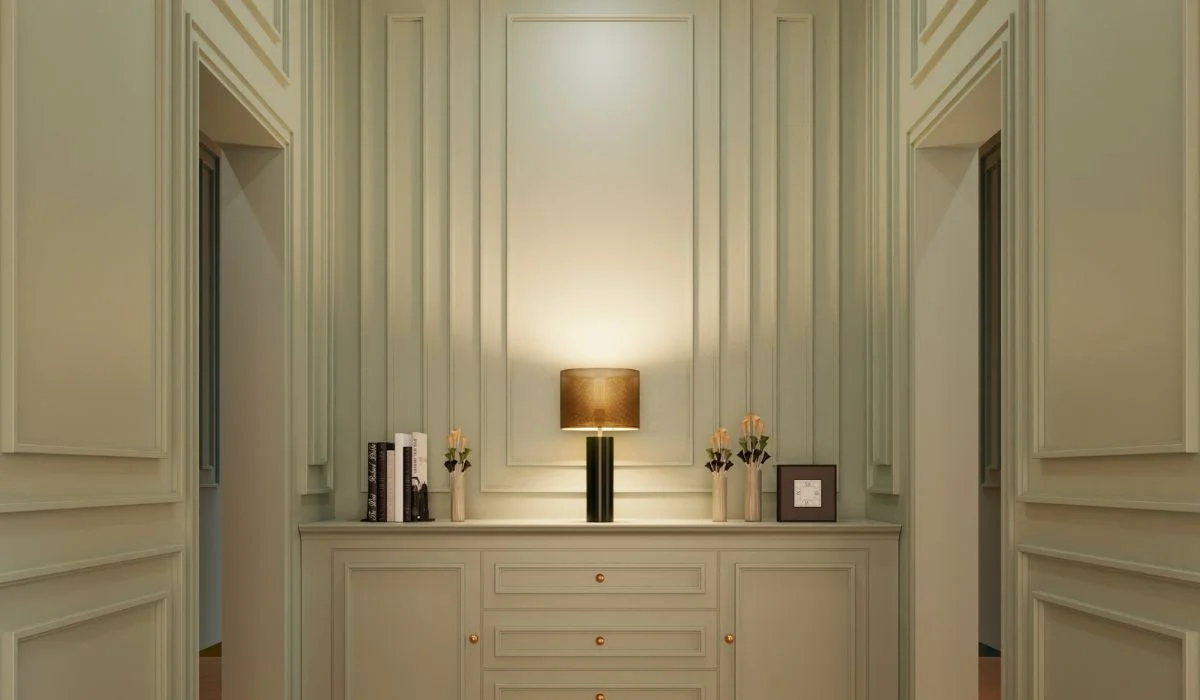
Shaker-style paneling uses clean rectangular frames and works particularly well in transitional, traditional, and modern interiors. It can cover a lower section of the wall or extend higher for a more dramatic effect.
Board and Batten
Board-and-batten designs combine wider wall sections with narrow vertical battens. The result is a structured pattern that can make walls feel taller and works well in bedrooms, hallways, living rooms, and entryways.
Slat and Fluted Panels
Slatted panels use repeated narrow strips to create strong vertical texture, while fluted designs use curved grooves for a softer three-dimensional effect. These styles are especially useful when you want a modern feature without relying on complicated geometric patterns.
Wainscoting
Wainscoting generally covers part of the wall rather than the entire surface. It is a practical choice when you want traditional architectural detail while keeping the upper portion of the wall available for paint, artwork, or wallpaper.
Tongue-and-Groove and Shiplap
Tongue-and-groove panels create an interlocking, continuous appearance and can be installed vertically or horizontally. Shiplap is another recognizable option that can suit farmhouse, coastal, rustic, or updated modern interiors.
Modern Wall Paneling Ideas
Modern wall paneling focuses on clean lines, texture, proportion, and functionality rather than overly complicated decoration. The right panel design can add depth while keeping the overall space clean and contemporary.
Create a Single Statement Panel
You do not always need to cover an entire wall. A single large panel or a smaller section can add texture and dimension without overwhelming minimalist furniture or décor. This approach works especially well for accent areas and open-plan spaces.
Use Slatted Panels for Texture
Slatted and fluted panels are popular modern choices because their repeated lines create depth and subtle visual movement. They work particularly well behind TVs, beds, desks, or other focal points where you want texture without adding busy patterns.
Combine Paneling With Function
Modern paneling can do more than decorate a wall. Use slatted panels as a media wall, incorporate them into a room divider, or continue the design across doors and built-in storage for a seamless appearance. This approach combines visual interest with practical space planning.
How to Choose the Right Wall Paneling
Choosing the right design starts with the wall itself. Measure its width and height, note the location of doors, windows, sockets, switches, radiators, and vents, and decide whether you want to cover the complete wall or only part of it.
Then consider the room’s proportions. Vertical lines can draw the eye upward, while horizontal arrangements can emphasize width. In a small room, a simple pattern and lighter finish may create a more open feeling, whereas a large room can usually handle stronger texture or darker colors.
Think about the furniture placement too. If the wall already contains a large television, fireplace, artwork, or bed, choose a panel design that supports that feature instead of competing with it.
Wall Paneling Colors and Materials
Color can completely change the character of a paneling project. White and off-white remain versatile choices because they highlight architectural detail without dominating the room. Natural oak and other warm wood tones can create a softer, organic atmosphere, while deep green, navy, charcoal, or black can make a feature wall more dramatic.
Material selection is equally important. MDF is popular for painted decorative molding because it provides a smooth and consistent surface. Solid or veneered wood brings natural grain and warmth, while PVC can be more practical in moisture-prone areas. The best choice depends on the room, desired appearance, maintenance requirements, and budget.
Wall Paneling Ideas for Small Spaces
Small rooms do not automatically mean you should avoid paneling. The key is controlling the scale and visual weight of the design.
Try narrow vertical panels to emphasize height, or use half-wall paneling to add character without covering the entire room. Keeping the paneling and wall paint in similar shades can also create texture without introducing too much contrast.
Another useful technique is to panel only the wall that naturally attracts attention, such as the wall behind a bed, sofa, or desk. This creates a feature without making the whole room feel enclosed.
Common Wall Paneling Mistakes to Avoid
Wall paneling can dramatically improve a room, but small planning or installation mistakes can affect the final appearance. Before choosing a design or starting installation, consider the wall proportions, layout, materials, and practical features to achieve a balanced and professional finish.
Choosing the Wrong Panel Size or Pattern
Large patterns can overwhelm narrow walls, while very small designs may look lost on a large feature wall. Choose the panel scale according to the room’s size and proportions.
Ignoring Doors, Windows, and Fixtures
Sockets, switches, doors, windows, skirting boards, and heating equipment can affect the panel layout. Measure these elements before installation to avoid awkward cuts and uneven spacing.
Mixing Too Many Panel Styles
Combining different textures can work when done intentionally, but using too many panel styles in one room can make the space look busy and disconnected. Usually, one main panel style creates a more cohesive result.
Choosing Materials Only for Appearance
A panel may look perfect in a photo but may not suit your room’s moisture level, cleaning needs, or daily use. Consider durability, maintenance, installation requirements, and how the material works with your existing furniture and finishes.
Final Thoughts
The best wall paneling ideas combine visual appeal with practical planning. Whether you prefer classic wainscoting, clean Shaker frames, rustic wood, modern slats, or textured fluted panels, the right design should suit the room’s proportions and support the way you use the space.
Start with one wall, choose a suitable material, plan the panel height carefully, and consider the existing colors and architectural details. A well-planned paneling feature can add depth and character without requiring a complete interior makeover.
FAQs
What is the most popular type of wall paneling?
Shaker, board-and-batten, wainscoting, slat, fluted, and picture-frame styles are among the most versatile choices for modern homes.
Is wall paneling suitable for small rooms?
Yes. Simple vertical or half-wall designs can add character while helping a small room feel more balanced.
Should wall paneling match the wall color?
It does not have to. Matching colors create a subtle architectural effect, while contrasting colors make the paneling more noticeable.
Is MDF good for wall paneling?
MDF is widely used for decorative painted paneling because it has a smooth, consistent surface and can be shaped into different molding designs.
Can wall paneling make a room look bigger?
The right design can influence how a room feels. Vertical lines can emphasize height, while lighter colors and simple patterns can help maintain an open appearance.
Can you put wall paneling over an existing wall?
Often, yes, provided the existing surface is suitable, reasonably flat, clean, and structurally sound. The installation method depends on the panel type.
What wall paneling is best for a bathroom?
Moisture-resistant or waterproof materials are generally more appropriate for bathrooms. Always follow the manufacturer’s suitability and installation guidance.