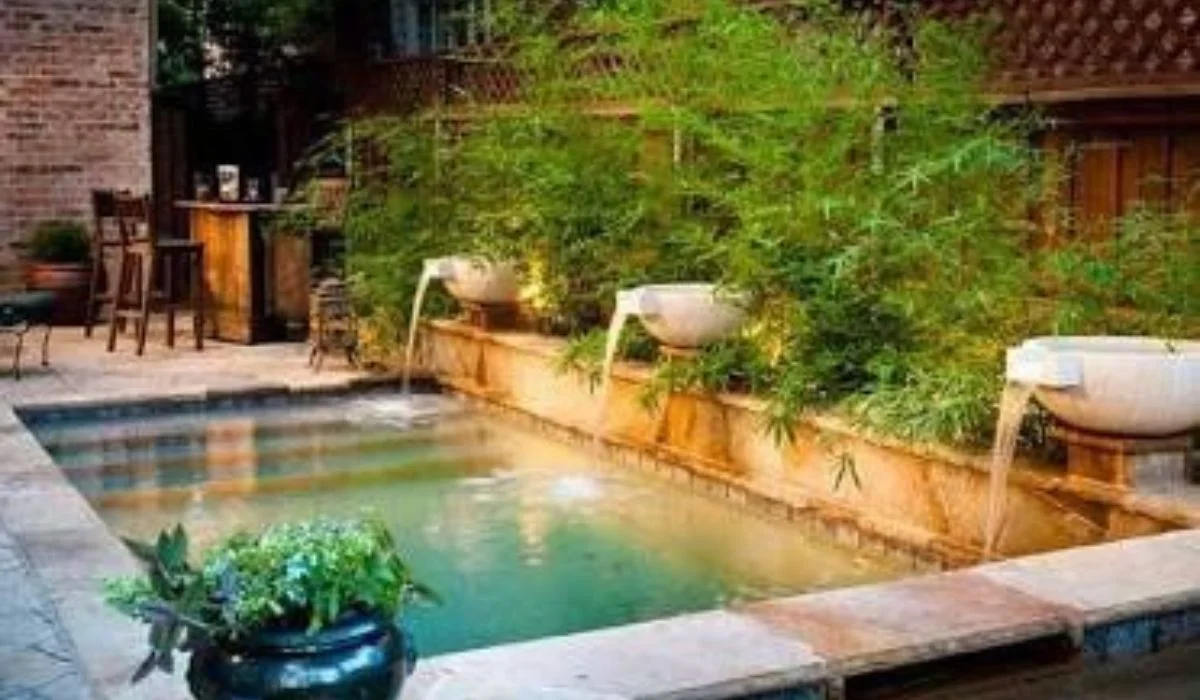
A cocktail pool is a compact pool designed primarily for relaxing, cooling off, and entertaining rather than swimming long distances. Its smaller footprint makes it especially useful when a traditional pool would take up too much of the yard.
With the right layout, a cocktail pool can become much more than a small swimming area. Built-in seating, tanning ledges, lighting, landscaping, water features, and surrounding patios can turn it into a complete outdoor living space. Whether you have a narrow yard or simply want to preserve room for a garden, dining area, or lawn, thoughtful planning can make a compact pool work beautifully.
What Is a Cocktail Pool?
A cocktail pool is a smaller pool designed around relaxation, socializing, and cooling off. Instead of providing a long swimming lane, it usually focuses on comfortable seating, shallow water, easy access, and features that make the space enjoyable for casual use.
The exact dimensions can vary considerably depending on the property and design. Many examples fall within a compact range of roughly 8–20 feet in length and around 3–5 feet in depth, but there is no single universal size that defines every cocktail pool.
The name can sometimes overlap with terms such as plunge pool or spool. However, the intended experience is an important distinction. Cocktail pools generally emphasize lounging and entertaining, while a plunge pool may focus more on cooling off or deeper immersion, and a spool often combines pool and spa characteristics.
Why Cocktail Pools Work Well in Smaller Yards
The biggest advantage of a cocktail pool is its ability to provide a pool experience without consuming the entire backyard. A smaller footprint can leave room for outdoor dining, a fire pit, planting beds, a lawn, or a comfortable patio.
This is particularly useful in urban and suburban properties where every section of the yard needs to serve a purpose. Instead of designing the pool first and trying to fit everything else around it, you can treat the pool as one part of a complete outdoor living plan.
A compact pool can also create a more intimate environment. Built-in benches and shallow areas encourage people to sit, talk, and relax together rather than treating the space purely as a swimming area. Recent coverage of cocktail pools also highlights their use as extensions of outdoor entertaining spaces.
Cocktail Pool vs. Plunge Pool vs. Spool
These terms can overlap, but each compact pool type is usually designed for a different purpose.
| Type | Main Purpose | Typical Features |
| Cocktail Pool | Relaxing and entertaining | Seating, ledges, lighting |
| Plunge Pool | Cooling and immersion | Deeper water, simple layout |
| Spool | Pool and spa combination | Jets, heating, seating |
| Dipping Pool | Wading and cooling | Shallow depth, compact size |
There is no universal rule separating these categories, so focus on the pool’s features and intended use rather than its name. A pool with jets and heating may be called a spool, while one focused on seating and entertaining may be marketed as a cocktail pool.
Choose based on how you plan to use the pool. For relaxing and entertaining, a cocktail pool can work well, while deeper water or spa-focused features may suit other needs better.
Cocktail Pool Ideas for Different Yard Layouts
The best cocktail pool ideas are not necessarily the most elaborate. A successful design works with the property’s shape, architecture, circulation, and outdoor lifestyle.
Rectangular Cocktail Pool
A rectangular pool is one of the easiest shapes to incorporate into a modern backyard. Straight edges can align with the house, patio, fencing, or existing hardscape, creating a clean and organized appearance.
This shape is particularly useful for narrow yards because the pool can run along the length of the property while leaving a walkway or seating zone beside it.
Corner Cocktail Pool
A corner installation can turn an underused part of the yard into the main relaxation area. This approach can preserve more central space for dining, gardening, or entertaining.
For a very small yard, consider the position of stairs, benches, equipment, and circulation before finalizing the pool shape. A corner pool only works well when people can still move comfortably around it.
L-Shaped Design
An L-shaped cocktail pool can create separate zones within one compact layout. One section might provide open water while another accommodates seating or a shallow ledge.
This design can also work around an existing patio or architectural feature. Because custom shapes can increase construction complexity, however, the design should be evaluated carefully before installation.
Freeform Pool
Freeform shapes use softer curves and can make a pool feel more natural. They work especially well with gardens, stone, irregular planting, and organic landscaping.
The drawback is that curves can make surrounding furniture and circulation more complicated. For very small properties, a simpler shape may use the available space more efficiently.
How to Plan a Cocktail Pool
Start by planning the entire backyard, not just the pool. Measure the space and note doors, fences, trees, utilities, pathways, and outdoor living areas. Also consider how people will enter, sit, and move around the pool.
Decide How You Will Use It
Think about your main activities, such as relaxing, entertaining, cooling off, or light exercise. Your needs will help determine which features are worth adding, such as built-in seating or a tanning ledge.
Measure the Complete Footprint
Include the pool, decking, coping, steps, equipment access, fencing, pathways, and seating areas in your measurements. Leave enough space for safe movement and maintenance, and check local requirements for setbacks, drainage, barriers, and electrical work.
Plan Around the Home
Position the pool where it connects naturally with the house, patio, or outdoor entertaining areas. Coordinating paving, colors, lighting, and landscaping with the home can make the pool feel like a natural extension of the property.
Features That Make a Small Pool More Useful
A small pool can still feel luxurious when you choose features that improve comfort and function without taking up too much space.
Built-In Seating
Built-in benches provide comfortable seating without using extra deck space. They are especially useful for relaxing and entertaining in compact pools.
Tanning Ledges
A tanning ledge creates a shallow area for sitting and relaxing. Keep it proportionate to the pool so it does not take away too much usable water space.
Water Features
Fountains, spillways, bubblers, and deck jets add movement and visual interest. Choose one or two features that complement the overall design rather than overcrowding the pool.
Lighting
Underwater and surrounding lights make the pool more useful after dark while improving visibility around steps and walkways. Use lighting selectively to create a comfortable atmosphere.
Heating and Spa Features
Heating can extend the pool season, while jets can create a spa-like experience. Consider your actual needs before adding these features, as they can increase equipment and operating costs.
Choosing Materials and Finishes
Material choice affects the pool’s appearance, durability, maintenance, installation, and cost. Common options include fiberglass, concrete or gunite, and vinyl liners. Fiberglass offers smooth surfaces and prefabricated designs, while concrete provides greater flexibility in shape and finish.
Surrounding materials such as stone, porcelain, concrete pavers, and wood-look finishes also influence the overall look. Choose colors and textures that complement your home and landscape, whether you prefer a modern polished style or a softer natural setting.
How to Plan a Cocktail Pool
Start by planning the entire backyard, not just the pool. Measure the space and note doors, fences, trees, utilities, pathways, and outdoor living areas. Also consider how people will enter, sit, and move around the pool.
Decide How You Will Use It
Think about your main activities, such as relaxing, entertaining, cooling off, or light exercise. Your needs will help determine which features are worth adding, such as built-in seating or a tanning ledge.
Measure the Complete Footprint
Include the pool, decking, coping, steps, equipment access, fencing, pathways, and seating areas in your measurements. Leave enough space for safe movement and maintenance, and check local requirements for setbacks, drainage, barriers, and electrical work.
Plan Around the Home
Position the pool where it connects naturally with the house, patio, or outdoor entertaining areas. Coordinating paving, colors, lighting, and landscaping with the home can make the pool feel like a natural extension of the property.
Benefits and Limitations of a Cocktail Pool
Cocktail pools offer several advantages for homeowners who prioritize relaxation over traditional swimming.
Key Benefits
- Suitable for compact yards
- Uses less space than a conventional pool
- Can leave room for patios and landscaping
- Works well for lounging and entertaining
- Can include built-in seating
- Supports features such as lighting and jets
- Can be designed in different shapes
- Often requires less water than a larger pool
- Can become a focal point for outdoor living
Their smaller water volume may also simplify some maintenance tasks, although compact pools still require proper filtration, cleaning, water testing, and chemical management.
Important Limitations
The main limitation is swimming space. A cocktail pool is generally not designed for traditional lap swimming, diving, or large pool games.
Capacity is also limited. If you regularly host large groups, a compact pool may feel crowded even if the surrounding yard is spacious. In addition, premium finishes, heating, jets, custom construction, landscaping, and difficult site conditions can make a small pool surprisingly expensive.
Expert Insights for Planning a Cocktail Pool
The most important planning decision is to determine how the pool will actually be used. Do not start by selecting the most attractive shape or the longest list of features. Start with your daily habits, available space, desired seating, privacy needs, and maintenance expectations.
A professional pool designer should also evaluate site conditions, drainage, access for construction equipment, utilities, local regulations, and the relationship between the pool and existing structures. A compact design can still involve significant engineering and construction work.
For small yards, prioritize circulation and usable outdoor space. A slightly smaller pool that leaves room for comfortable seating and movement may provide a better overall backyard experience than a larger pool that occupies nearly the entire property.
Common Cocktail Pool Mistakes
Avoiding common mistakes can help you make better use of your space and keep the pool practical over time. Careful planning of size, placement, features, and maintenance can prevent costly problems later.
Making the Pool Too Large
Trying to maximize water space can leave too little room for seating, landscaping, or circulation. Consider the entire backyard before increasing pool dimensions.
Adding Too Many Features
Jets, waterfalls, lighting, ledges, fire features, and smart controls can all be appealing, but adding everything can increase complexity and cost. Choose features that support your main use.
Ignoring Privacy
A pool may be comfortable but still feel exposed if neighboring homes overlook the yard. Plan privacy through landscaping, fencing, screens, or architectural elements where appropriate.
Forgetting Equipment Access
Pool equipment needs maintenance and occasional repairs. Make sure pumps, filters, heaters, and other systems remain accessible after landscaping and hardscaping are completed.
Choosing Style Over Function
A dramatic shape or finish may look impressive but may not suit the way you use the pool. Function, access, maintenance, and proportions should remain central to the design.
Maintenance Tips
A cocktail pool still needs regular care, including removing debris, checking water chemistry, cleaning surfaces, maintaining filters, and inspecting pumps and heating equipment.
Since smaller pools have less water, temperature and chemical changes can happen quickly. Follow the equipment guidelines and maintain a consistent cleaning routine. An automatic cover can reduce debris, evaporation, and heat loss, while low-debris landscaping can make cleaning easier.
Future Trends in Cocktail Pool Design
Future cocktail pool designs are likely to focus increasingly on multifunctional outdoor living. Homeowners can use compact pools alongside outdoor kitchens, dining spaces, fire features, gardens, and flexible seating rather than treating the pool as a standalone feature.
Smart controls are another developing area. Current compact-pool designs already incorporate controls for temperature, lighting, jets, and cleaning systems, allowing several functions to be managed more conveniently.
Energy-conscious equipment, automatic covers, efficient pumps, durable finishes, and lower-maintenance landscaping are also useful directions for homeowners interested in reducing ongoing resource use. The most effective future designs will likely combine comfort, technology, efficient use of space, and easier maintenance.
Conclusion
A cocktail pool can bring the benefits of a backyard pool to properties where a traditional swimming pool would take up too much room. Its compact format works particularly well for relaxing, entertaining, cooling off, and creating a stylish outdoor living area.
The best cocktail pool ideas begin with the yard itself. Consider the available footprint, circulation, privacy, intended use, materials, seating, landscaping, and long-term maintenance before choosing the final design. With thoughtful planning, even a small backyard can accommodate a comfortable and visually impressive pool.
FAQs
What is a cocktail pool?
A cocktail pool is a compact pool designed mainly for relaxing, cooling off, and entertaining rather than swimming laps.
How big is a cocktail pool?
Sizes vary, but many designs are roughly 8–20 feet long and 3–5 feet deep.
Are cocktail pools good for small backyards?
Yes. Their compact footprint makes them suitable for small or narrow yards.
What are the best cocktail pool ideas?
Popular options include corner pools, rectangular layouts, built-in seating, tanning ledges, lighting, and water features.
Can a cocktail pool have jets?
Yes. Jets and heating can be added to create a more spa-like experience.
Are cocktail pools expensive?
Costs vary widely based on size, construction material, site work, finishes, and added features.
Can you swim in a cocktail pool?
You can move and exercise lightly in many designs, but they are generally not intended for traditional lap swimming.
What is a spool?
A spool is a compact pool that combines pool and spa characteristics, often using heating and jets.