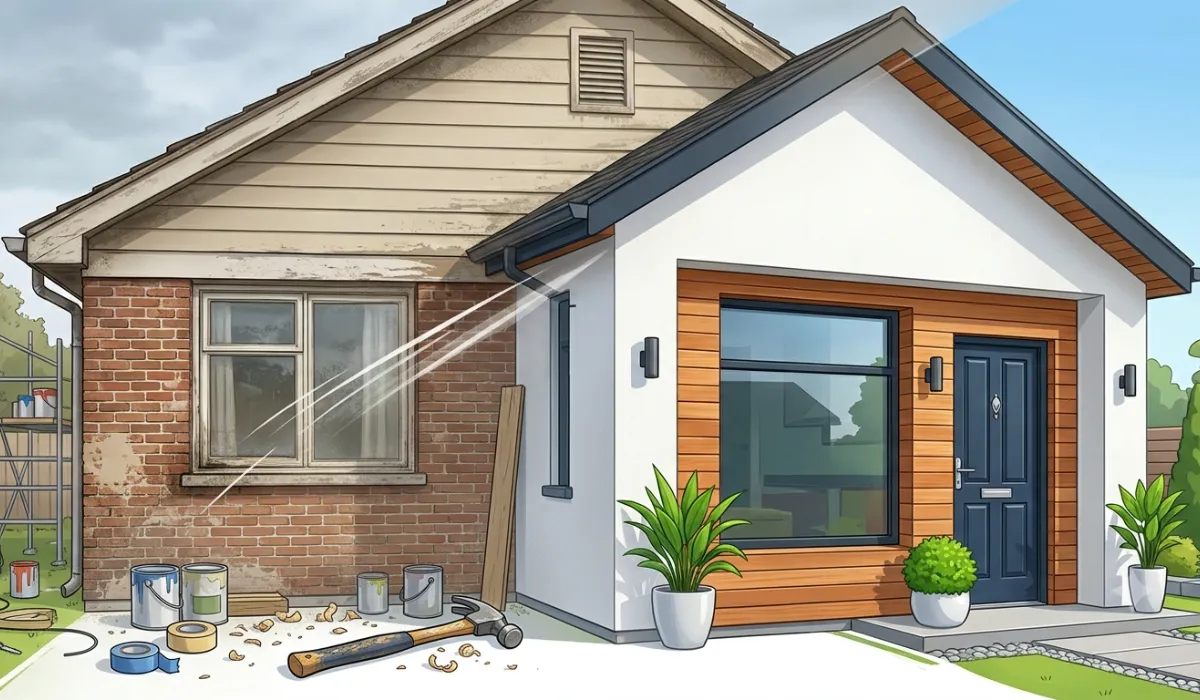
Your home’s exterior creates the first impression before anyone enters the front door. A well-planned exterior home design can make a property feel welcoming, balanced, modern, and connected to its surroundings. It is not only about choosing a beautiful paint color; the façade, roof, windows, entrance, materials, lighting, landscaping, and outdoor spaces all need to work together.
Whether you are building a new house, renovating an existing property, or exploring a home improvement reboot, the right exterior design should balance appearance with practical needs. Weather, maintenance, privacy, available space, budget, and the architectural character of the house should all influence your choices.
This guide explains the major elements of exterior design and shares practical exterior house design ideas that can help you create a home that looks attractive while remaining functional for everyday life.
What Is Exterior Home Design?
Exterior home design refers to the planning and styling of everything visible on the outside of a house. This includes the façade, roof, doors, windows, walls, balconies, porches, pathways, landscaping, lighting, fences, and exterior finishes.
Good exterior home design is about creating visual harmony rather than adding as many decorative elements as possible. The colors should complement the materials, windows should suit the proportions of the building, and landscaping should support rather than hide the architecture.
A successful exterior also needs to perform well. Materials should suit the local climate, drainage should be considered, outdoor surfaces should be practical to maintain, and entrances should be safe and convenient.
Key Elements of a Well-Planned Exterior
A well-planned exterior brings together the main features of a home to create a balanced and attractive appearance. The façade, entrance, windows, roof, materials, and other details should complement each other while also supporting the home’s practical needs. By planning these elements carefully, you can create an exterior that looks cohesive, welcoming, and functional.
1. Front Facade and Proportions
The front façade is usually the most noticeable part of a house. Its shape, windows, doors, roofline, balconies, and decorative details determine much of the property’s visual character.
Pay attention to proportion before choosing decorative features. A large entrance on a small façade can feel overwhelming, while a very small doorway may disappear on a large house. Repeating certain materials or lines across the façade can create a more connected appearance.
2. Entrance and Front Door
The entrance should naturally attract attention because it provides the transition between the street and the home. A contrasting door, canopy, porch, steps, or carefully positioned lighting can create a strong focal point.
For a modern home, a simple oversized door with clean lines may work well. Traditional properties can benefit from more detailed doors, columns, trim, or porch elements. The important point is to make the entrance feel intentional rather than separate from the rest of the exterior.
3. Windows and Natural Light
Windows influence both the appearance and performance of a house. Large windows can create a contemporary look and improve daylight, while carefully positioned smaller windows may provide greater privacy.
Window frames should coordinate with the home’s architecture and exterior colors. Shading devices, awnings, screens, shutters, or overhangs can also provide practical benefits in climates with strong sunlight.
4. Roof and Architectural Shape
The roof is one of the largest visual elements of a house. Its pitch, material, color, and shape should complement the overall architecture.
Gabled, flat, hip, and sloped roofs can create very different impressions. Instead of treating the roof as an afterthought, consider it as part of the complete exterior composition.
Popular Exterior House Design Styles
Choosing a design style makes later decisions about materials, colors, doors, windows, and landscaping much easier.
| Style | Main Characteristics | Suitable Elements |
| Modern | Clean lines and simple forms | Concrete, glass, metal, wood |
| Contemporary | Flexible and refined | Mixed materials, large windows |
| Traditional | Balanced and familiar | Brick, stone, pitched roofs |
| Minimalist | Simple and uncluttered | Neutral colors, clean surfaces |
| Farmhouse | Warm and relaxed | Wood-look siding, porches |
| Rustic | Natural and textured | Stone, wood, earthy colors |
| Mediterranean | Warm and decorative | Stucco, arches, tile |
| Industrial | Bold and structural | Metal, concrete, brick |
The best style is not necessarily the one that looks most impressive in a photograph. It should suit the home’s architecture, surrounding environment, climate, and your long-term maintenance expectations.
Modern Home Exterior Ideas
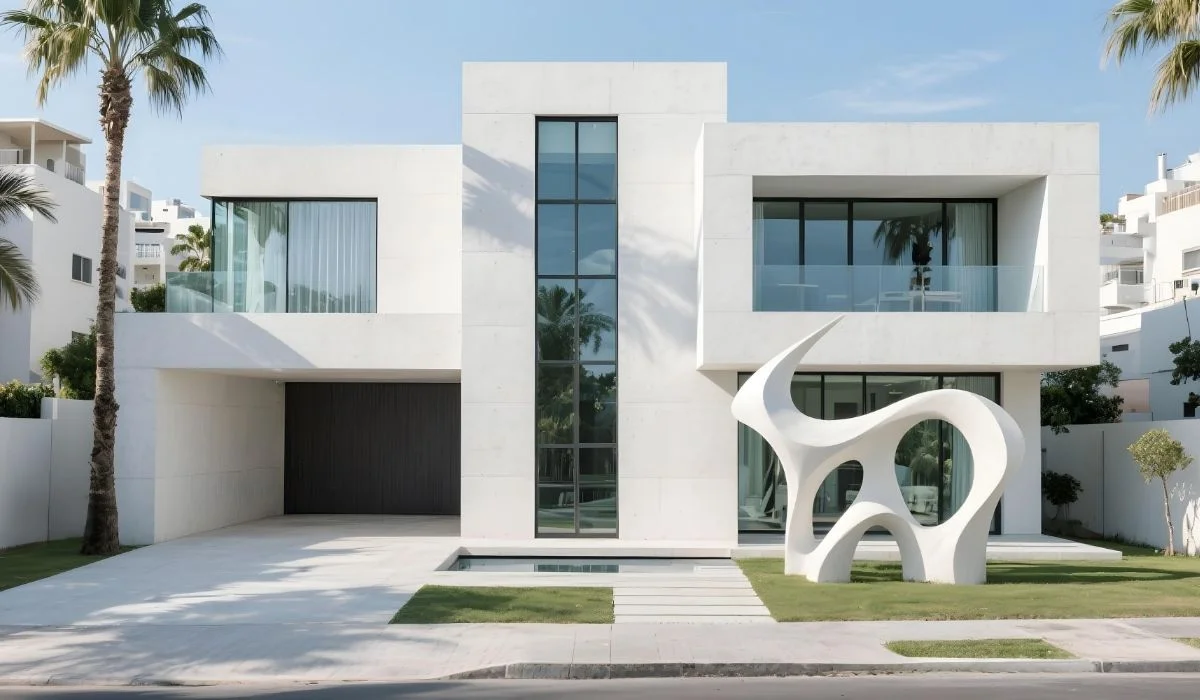
A modern home exterior usually focuses on simplicity, strong geometry, clean surfaces, and a controlled material palette. White, gray, beige, charcoal, natural wood, concrete, metal, and glass are often used to create a contemporary appearance.
Combine Two or Three Materials
Instead of covering the entire façade with one material, use a small number of complementary finishes. For example, a simple plaster or painted wall can be paired with wood-look panels and stone around the entrance.
Mixed materials can create depth without requiring complicated ornamentation. The key is repetition: use each material in more than one location so the exterior feels coordinated.
Use Strong Geometric Lines
Horizontal lines can make a building feel wider, while vertical elements can emphasize height. Box-shaped projections, recessed balconies, horizontal windows, and simple roof forms can give a modern façade architectural interest.
Geometry should still serve the structure. Too many competing shapes can make a house look visually confusing.
Add Warmth to Modern Designs
Modern does not have to mean cold. Natural wood tones, warm lighting, plants, textured stone, and earthy colors can soften concrete, glass, and metal.
This balance is particularly useful when you want a contemporary house to feel comfortable and welcoming rather than overly industrial.
How to Choose Exterior Colors
Color can completely change how a house appears. Before selecting a shade, consider the architectural style, roof, neighboring properties, landscaping, natural light, and existing materials.
A simple approach is to choose one dominant exterior color, one secondary tone, and a smaller accent color for features such as the door, shutters, railings, or trim.
Neutral Exterior Color Combinations
White, cream, beige, gray, taupe, and soft earthy tones provide flexible foundations. They can work with many architectural styles and allow doors, landscaping, or architectural details to become focal points.
For a modern exterior, combinations such as warm white with charcoal, beige with dark brown, or soft gray with natural wood can create a balanced appearance.
Bold Exterior Colors
Dark green, deep blue, charcoal, terracotta, or other stronger shades can give a house more personality. However, bold colors are usually easier to manage when they are used strategically rather than across every surface.
Test exterior colors in natural daylight before making a final decision. A color that looks subtle on a small sample can appear much stronger across an entire façade.
Best Materials for Exterior Design
Materials influence appearance, durability, maintenance, and cost, so they should be selected as carefully as the color palette.
Brick
Brick provides texture and a timeless appearance. It can be used across the entire façade or limited to specific areas such as the entrance, lower walls, or chimney.
Stone
Natural or manufactured stone can add weight and texture to a façade. It works particularly well around entrances, foundation walls, columns, and feature sections.
Wood and Wood-Look Finishes
Wood adds warmth and natural character. Depending on the product and climate, wood-look materials can provide a similar visual effect with different maintenance requirements.
Stucco and Plaster
Smooth exterior finishes create a clean appearance and work particularly well with Mediterranean, contemporary, and minimalist designs.
Fiber Cement and Siding
Siding can introduce horizontal, vertical, or textured patterns. Combining different siding profiles can also create visual separation between sections of a house.
A good material combination should feel intentional. Mixing too many finishes can make the exterior look busy, while using only one finish everywhere may make it feel flat.
Front Elevation Ideas for a More Attractive Home
The front elevation creates the first visual impression of your home, so focus on the entrance, roofline, windows, balconies, and landscaping. These elements should work together to create a balanced and welcoming look.
For a modern exterior, use clean lines, large windows, contrasting colors, textured walls, and simple lighting. Traditional homes can use brick, columns, pitched roofs, and classic details. Keep one or two main focal points instead of making every feature stand out.
Exterior Ideas for Small Houses
Small homes can have excellent exterior design without using expensive or oversized features. In fact, simplicity often works better because too many decorative elements can make a compact façade appear crowded.
Use a limited color palette and emphasize vertical or horizontal lines according to the desired visual effect. A well-designed entrance, simple porch, attractive lighting, and carefully placed plants can create considerable impact without consuming much space.
For narrow homes, vertical landscaping, tall windows, slim architectural details, and a clear pathway can help organize the exterior. Light colors can also create an open visual feeling, while a darker accent can define the entrance.
Landscaping and Outdoor Spaces
Landscaping is an important part of exterior design. Plants, trees, pathways, and planters can frame the entrance, soften walls, provide shade, and connect the home with its surroundings.
For small properties, use a few well-placed plants instead of overcrowding the space. Patios, decks, balconies, porches, and seating areas can also extend outdoor living while matching the home’s materials and colors.
Exterior Lighting Ideas
Exterior lighting improves both appearance and practical usability after sunset. It can highlight the entrance, illuminate pathways, improve visibility, and emphasize architectural features.
Wall lights near doors, pathway lights, recessed fixtures, landscape lighting, and subtle façade lighting can be combined according to the home’s layout.
Avoid excessive brightness. A layered lighting plan usually creates a more comfortable result than placing powerful lights everywhere. Consider where people walk, where shadows form, and which architectural details deserve emphasis.
Benefits of Good Exterior Home Design
A thoughtful exterior provides several practical and visual benefits:
- Creates a stronger first impression.
- Makes the architecture feel more cohesive.
- Improves outdoor usability.
- Supports privacy and security.
- Helps connect the house with landscaping.
- Allows architectural features to stand out.
- Can make small homes feel more organized.
- Makes future maintenance easier when materials are chosen carefully.
- Gives the property a distinctive visual identity.
The biggest benefit is balance. A beautiful exterior should also work with the way the household actually uses the property.
Expert Insights for Planning Your Home Exterior
Before finalizing an exterior home design, look at the entire property rather than focusing only on the front wall. Consider the driveway, boundary, entrance, roof, windows, outdoor seating, landscaping, drainage, lighting, and neighboring buildings as one composition.
Always check materials in real daylight and, where possible, view large samples before making final decisions. Exterior colors and textures can look very different depending on sunlight, shade, weather, and surrounding surfaces.
It is also worth planning maintenance from the beginning. Ask how often the chosen paint, cladding, wood finish, roof material, or landscaping will need attention. A slightly simpler design that remains attractive with manageable maintenance can be more practical over the long term.
Common Exterior Design Mistakes
Even a well-designed home exterior can lose its appeal when small planning mistakes are overlooked. Using too many colors, combining unrelated materials, or adding unnecessary decorative features can make the façade feel unbalanced. Avoiding these common mistakes can help create a cleaner, more cohesive, and attractive exterior.
Using Too Many Colors
Multiple strong colors can make a façade look disconnected. Start with a controlled palette and use accent colors selectively.
Mixing Too Many Materials
Brick, stone, wood, metal, glass, and several siding styles can all work together, but using everything at once may create visual clutter. Choose materials that share a common color or texture relationship.
Ignoring the Surroundings
A house should relate to its environment. Consider neighboring homes, vegetation, street conditions, local architecture, and the natural landscape before selecting a dramatic exterior style.
Choosing Looks Over Practicality
A design may look excellent in photographs but perform poorly in everyday conditions. Consider heat, rain, dust, humidity, sunlight, cleaning, drainage, and material durability.
Neglecting the Entrance
Even an attractive façade can feel incomplete if the front door, steps, pathway, and lighting are poorly planned. The entrance should be easy to find and comfortable to approach.
Future Trends in Home Exterior Design
Exterior design is moving toward greater flexibility, stronger indoor-outdoor connections, natural-looking materials, and practical landscaping. Large windows, outdoor living spaces, shaded areas, and landscaping are increasingly being considered as connected parts of the home’s overall design.
Mixed materials are also useful for creating visual depth without complicated architecture. Wood-look finishes, stone textures, metal accents, glass, and simple painted surfaces can be combined to create distinct zones across the façade.
Another important direction is practical sustainability. Homeowners are increasingly considering durable materials, water-conscious landscaping, shade, natural ventilation, and lighting efficiency alongside appearance.
The future of exterior design is therefore not simply about creating a striking façade. It is about making the entire property more comfortable, functional, durable, and visually connected.
Conclusion
A successful exterior home design combines architecture, materials, colors, landscaping, lighting, and practical planning into one cohesive appearance. Whether you prefer a modern home exterior, traditional façade, rustic character, or minimalist design, the most important step is to choose elements that work together.
Start by understanding your home’s proportions and surroundings, then select a design style, material palette, exterior colors, entrance treatment, and landscaping plan. Keep maintenance and climate in mind throughout the process.
With thoughtful planning, even simple exterior choices can transform the appearance of a home while creating a more welcoming and functional outdoor environment.
FAQs
What is exterior home design?
It includes the design of a home’s façade, roof, doors, windows, colors, materials, lighting, and landscaping.
What makes a modern home exterior attractive?
Clean lines, simple colors, mixed materials, large windows, and suitable lighting create a modern look.
Which exterior colors work well for modern homes?
White, beige, gray, taupe, and charcoal are popular choices, especially with natural wood accents.
How can I improve a small house exterior?
Use simple colors, a clear entrance, good lighting, and minimal landscaping to keep the exterior open and attractive.
What materials are popular for exterior design?
Brick, stone, stucco, wood, fiber cement, metal, glass, and siding are common choices.
How important is landscaping?
Landscaping adds beauty, improves privacy, and helps connect the home with its surroundings.
Should the front door match the exterior walls?
Not necessarily. A complementary or contrasting color can make the entrance stand out.