Kitchen hood ideas can help transform an ordinary cooking area into a stylish, functional, and well-designed space. Whether you prefer a modern stainless-steel hood, a warm wood enclosure, a curved plaster design, or a concealed hood that blends into cabinetry, the right choice can complement your kitchen while helping remove smoke, grease, steam, and cooking odors.
However, choosing a kitchen hood involves more than appearance. You should consider your kitchen layout, cooktop size, cooking habits, ventilation requirements, available space, and existing finishes. With the right combination of design and performance, a kitchen hood can become both a practical appliance and an attractive focal point.
Why Kitchen Hood Design Matters
A kitchen hood plays an important role in maintaining a comfortable cooking environment. Depending on its design and installation, it can capture airborne grease, smoke, steam, and odors produced during cooking. A properly selected and installed hood can also help reduce grease buildup on nearby surfaces.
Beyond functionality, a hood can influence the entire kitchen’s appearance. A sculptural design can draw attention to the cooking area, while a concealed model can maintain a clean, minimalist look. The best option balances ventilation performance with the style and proportions of your kitchen.
Kitchen Hood Ideas for Different Interior Styles
The most successful kitchen hood designs complement the cabinetry, countertops, backsplash, lighting, and overall character of the room.
Modern Kitchen Hood Ideas
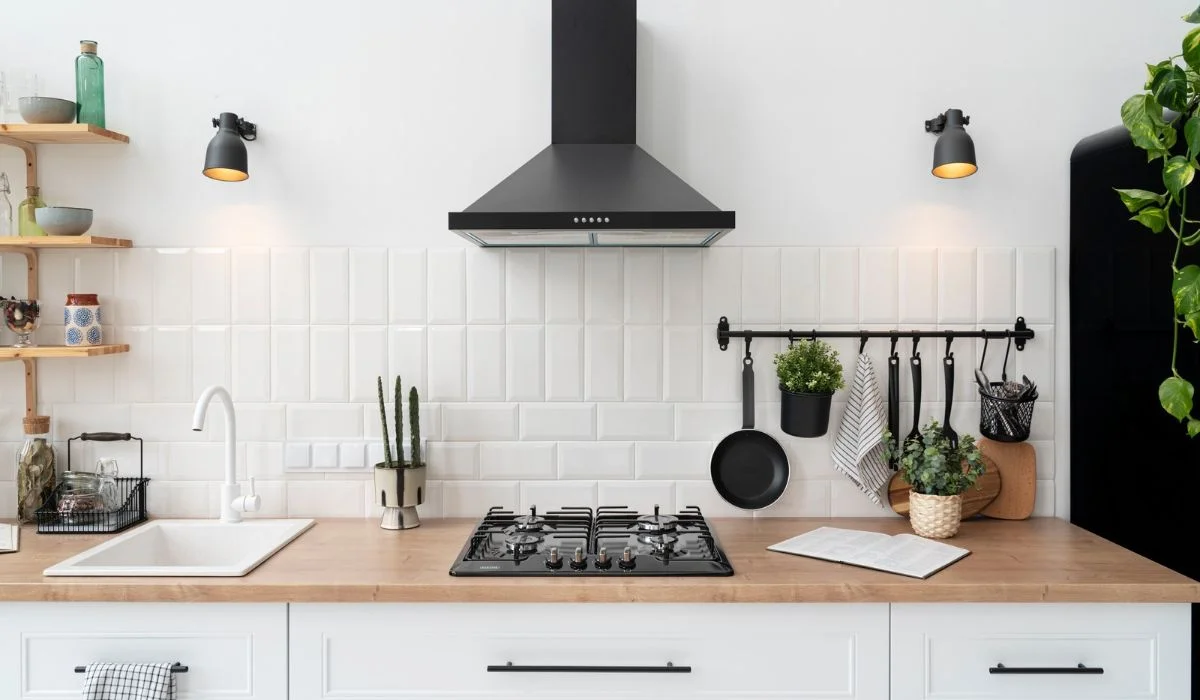
For a contemporary kitchen, consider a streamlined stainless-steel hood, a minimalist black design, or a concealed model integrated into the cabinetry. Simple shapes and clean edges work particularly well with handleless cabinets, smooth countertops, and understated backsplashes.
If you want a more distinctive look, consider a geometric hood or a custom enclosure with a smooth plaster-like finish. Keep the surrounding materials relatively simple so the hood stands out without competing with other design features.
Farmhouse and Rustic Kitchen Hoods
Farmhouse kitchens often benefit from natural textures and traditional detailing. A wood-clad hood, a painted enclosure with decorative trim, or a simple design in a warm neutral color can complement shaker cabinets, exposed beams, and natural wood countertops.
For a rustic appearance, consider finishes that coordinate with existing wooden furniture or ceiling details. Avoid introducing too many competing wood tones; a consistent palette usually creates a more cohesive result.
Industrial Kitchen Hood Ideas
Industrial kitchens pair well with stainless steel, black metal, exposed brick, concrete-inspired surfaces, and dark cabinetry. A metal hood with visible edges can reinforce this aesthetic while creating a strong visual anchor above the cooktop.
To soften the industrial look, introduce warm wood shelves, natural textures, or softer lighting. This creates contrast without losing the clean, functional character of the design.
Traditional and Transitional Designs
Traditional kitchens can benefit from framed hood enclosures, decorative molding, curved silhouettes, and finishes that match the cabinetry. These details help the hood feel connected to the home’s architecture.
Transitional kitchens offer more flexibility. You can combine a classic hood shape with contemporary hardware, modern lighting, or a contrasting finish. The result feels timeless without appearing overly formal.
Modern Kitchen Hood Ideas That Make a Statement
If you want the hood to become the centerpiece of your kitchen, focus on shape, material, and contrast rather than adding unnecessary decoration.
Curved and Arched Hoods
A curved or arched hood introduces softer lines into a kitchen dominated by rectangular cabinets and countertops. This style works particularly well in traditional, Mediterranean-inspired, and contemporary spaces.
For a balanced result, repeat the hood’s curves or finish in a nearby feature, such as an arched doorway, rounded pendant light, or complementary hardware.
Wood and Mixed-Material Hoods
Wooden hood enclosures can add warmth to kitchens with white, gray, or dark cabinetry. Oak, walnut-inspired finishes, and painted wood offer different visual effects depending on the surrounding materials.
You can also combine materials, such as wood with a metal insert or a painted enclosure with contrasting trim. Make sure the materials and finishes are appropriate for the heat and grease exposure around the cooking area, and follow the appliance manufacturer’s installation requirements.
Plaster and Stone-Look Hoods
A smooth plaster-style enclosure creates a soft, architectural appearance. It works well in minimalist, Mediterranean, and contemporary kitchens, especially when paired with simple cabinets and natural materials.
Stone-look finishes or a hood coordinated with the backsplash and countertop can produce a more unified design. Before choosing a heavy surface or custom enclosure, confirm that the structure and installation method can safely support it.
Kitchen Hood Ideas for Small Kitchens
Small kitchens benefit from compact hood designs that save visual space without sacrificing ventilation. Choosing the right style, finish, and size can help keep your kitchen looking open and uncluttered.
Choose an Under-Cabinet Hood
An under-cabinet hood fits beneath existing cabinets, making it ideal for compact kitchens. Check its depth and coverage to ensure it can effectively capture cooking fumes.
Use a Concealed Hood
A concealed hood integrates into cabinetry for a clean, seamless appearance. Make sure filters and controls remain accessible for maintenance.
Keep the Design Simple
Choose a hood that matches your cabinets or wall color to create a cohesive look. Avoid bulky designs, but ensure the hood still provides adequate ventilation for your cooktop.
Kitchen Hood Types: Which One Should You Choose?
Kitchen Hood Types: Which One Should You Choose?
Choosing the right kitchen hood depends on your kitchen layout, available space, and ventilation needs. Each type offers different design and installation benefits.
Wall-Mounted Range Hoods
Installed above wall-side cooktops, these hoods come in various finishes and can create an attractive focal point. Check the size, mounting height, and ducting requirements before installation.
Island Range Hoods
Designed for cooktops on kitchen islands, these hoods are visible from every side. Choose a style that suits your island and plan the ceiling ductwork in advance.
Under-Cabinet Hoods
These compact hoods fit beneath cabinets, making them suitable for smaller kitchens. Ensure the model fits your cabinetry and provides adequate ventilation.
Insert and Downdraft Systems
Insert hoods fit inside custom enclosures for a seamless look. Downdraft systems draw cooking fumes downward and may suit certain layouts, but check their performance and installation requirements before choosing one.
Choosing the Right Kitchen Hood Materials and Colors
The finish you choose should complement your cabinetry, countertops, backsplash, and other metal accents.
Stainless steel is a versatile choice for contemporary and professional-inspired kitchens. It coordinates well with many appliances, although fingerprints and grease may require regular cleaning.
Black hoods create contrast against lighter cabinets and can reinforce modern or industrial interiors. White and cabinet-matched finishes are useful when you want the hood to blend into the overall design.
Wood adds natural warmth, while painted or plaster-style enclosures can provide a softer, more architectural look. Stone-look surfaces can connect the hood visually with a countertop or backsplash, creating continuity across the cooking area.
When combining finishes, choose one dominant material and use the others as supporting accents. This helps the hood look intentional rather than disconnected from the rest of the kitchen.
How to Choose a Kitchen Hood for Your Cooking Needs
Appearance matters, but ventilation performance should guide the final decision.
Check Hood Width and Cooktop Coverage
The hood should be appropriately sized for the cooking surface beneath it. A wider or more demanding cooktop may require a different hood configuration than a compact electric hob.
Check the appliance manufacturer’s recommendations for width, mounting height, and coverage. Do not rely on appearance or general sizing rules alone.
Understand Ventilation Capacity
Range hood airflow is commonly measured in cubic feet per minute (CFM). The required capacity depends on factors such as the cooktop type, heat output, hood design, ductwork, and how frequently you cook.
High-heat cooking, frying, and frequent use may increase ventilation demands. A qualified kitchen installer can help determine suitable capacity and duct sizing for your particular setup.
Choose Between Ducted and Ductless Venting
A ducted hood carries cooking exhaust outside through a duct. A ductless or recirculating model filters the air and returns it to the kitchen. These systems work differently, and their suitability depends on the kitchen layout, local requirements, and appliance specifications.
Where possible, assess the ventilation route early in the renovation. Ducting, bends, and installation constraints can affect performance, noise, and cost.
Common Kitchen Hood Design Mistakes to Avoid
Even an attractive hood can look out of place or perform poorly if key details are overlooked.
Prioritizing Appearance Over Performance
A sculptural hood is not necessarily suitable for every cooktop. Check its ventilation capacity, coverage, and installation requirements before committing to the design.
Choosing the Wrong Scale
A hood that looks too small can feel disconnected from a large range, while an oversized enclosure may overwhelm a compact kitchen. Consider the cooktop width, ceiling height, cabinets, and surrounding wall before deciding on the proportions.
Ignoring Cleaning and Maintenance
Grease and dust can collect on hood surfaces and filters. Choose a finish you can maintain comfortably and check the manufacturer’s guidance for cleaning filters and other components.
Forgetting Ducting and Clearance Requirements
Ventilation routes and mounting heights affect both safety and performance. Confirm the required clearances and installation method before building a custom enclosure or ordering cabinetry.
Kitchen Hood Maintenance Tips
Regular maintenance helps keep the hood working effectively and preserves its appearance. Clean accessible exterior surfaces using products suitable for the finish, and wash or replace filters according to the manufacturer’s instructions.
If your hood uses a recirculating system, check whether its odor-control filters require periodic replacement. For ducted systems, follow the manufacturer’s maintenance recommendations and arrange professional inspection if you notice persistent ventilation problems, unusual noise, or reduced airflow.
Final Thoughts
The best kitchen hood ideas combine attractive design with practical ventilation. Whether you choose a sleek metal model, a warm wood enclosure, a concealed insert, or a statement island hood, the design should suit your kitchen’s layout, cooking habits, and overall style.
Start by confirming your ventilation requirements and installation constraints. Then choose a shape, material, and finish that complements your cabinetry and countertops. With careful planning, your kitchen hood can become a beautiful architectural feature while remaining an effective part of your cooking space.
FAQs
What is the most popular kitchen hood style?
Wall-mounted, under-cabinet, concealed, and island hoods are common choices. The best style depends on the cooktop location, kitchen layout, and desired appearance.
How can I make my kitchen hood look modern?
Choose clean lines, a streamlined finish, and a shape that complements the cabinetry. Black metal, stainless steel, concealed designs, and simple custom enclosures can all work well.
What type of kitchen hood is best for a small kitchen?
An under-cabinet or concealed hood may help save visual space. Always confirm that its coverage and ventilation capacity suit your cooking equipment.
Is a ducted kitchen hood better than a ductless one?
Ducted models exhaust air outside, while ductless models filter and recirculate it. The best choice depends on your layout, installation options, and ventilation needs.
Can I use wood around a kitchen hood?
Yes, a wood enclosure can create a warm, attractive design, but the installation must meet the appliance’s heat-clearance requirements and use suitable materials.
How often should I clean my range hood?
Cleaning frequency depends on cooking habits and the manufacturer’s instructions. Regularly clean the exterior and maintain filters as recommended, especially if you cook frequently or produce a lot of grease.