A staircase is more than a way to move between floors. It can also become an important part of your home’s interior design. The rail of the stairs plays a major role because it provides support while also adding shape, character, and style to the staircase.
When choosing a stair railing, you need to think about more than appearance. The material, height, grip, spacing, maintenance, and overall staircase layout can all affect the final result. A good railing should feel comfortable to use and should work naturally with the rest of the home.
Whether you are building a new staircase or updating an old one, understanding the available options can make the decision much easier.
What Is a Stair Railing?
A stair railing is the protective structure installed along a staircase. It may include a handrail, vertical balusters, posts, panels, or other supporting elements.
A handrail is the part designed to be held for support. A guard or stair rail, on the other hand, helps protect people from falling from an open side of the staircase. These terms are sometimes used interchangeably, but they can serve different functions depending on the staircase design and applicable building requirements.
In a residential setting, these elements can also have a strong decorative purpose. A simple metal railing can give a staircase a modern appearance, while wood can create a warmer and more traditional feel.
Why Is a Stair Railing Important?
Safety is the main reason for installing a railing, but it is not the only benefit.
A properly designed railing gives people something to hold when walking up or down the stairs. This can be particularly useful for children, older adults, and anyone who needs additional support.
The railing also helps define the edge of an open staircase. Instead of leaving the side visually unfinished, it creates a clear boundary while making the staircase look more complete.
From a design perspective, the railing can connect the staircase with the rest of the room. Repeating materials or finishes used elsewhere in the home can make the entire interior feel more coordinated.
Popular Stair Railing Materials
There is no single material that works for every staircase. Your choice should depend on the style of your home, maintenance requirements, budget, and the amount of use the staircase receives.
Wooden Stair Railings
Wood remains a popular choice because it adds warmth and natural texture. It works particularly well with wooden stairs, traditional interiors, farmhouse designs, and transitional spaces.
Oak, walnut, maple, and other hardwoods can be shaped into different handrail profiles and baluster designs. A simple wooden handrail can look clean and modern, while turned balusters can create a more traditional appearance.
Wood does require some care. Finishes can become worn over time, especially on stairs that receive heavy daily use. Keeping the surface clean and refinishing it when necessary can help maintain its appearance.
Metal Stair Railings
Metal railings are suitable for modern, industrial, and minimalist interiors. Steel and iron can be formed into thin vertical bars, geometric patterns, or more decorative designs.
Metal is also useful when you want a strong railing with a relatively slim appearance. Powder-coated finishes can provide additional protection and allow the railing to work with different interior colour schemes.
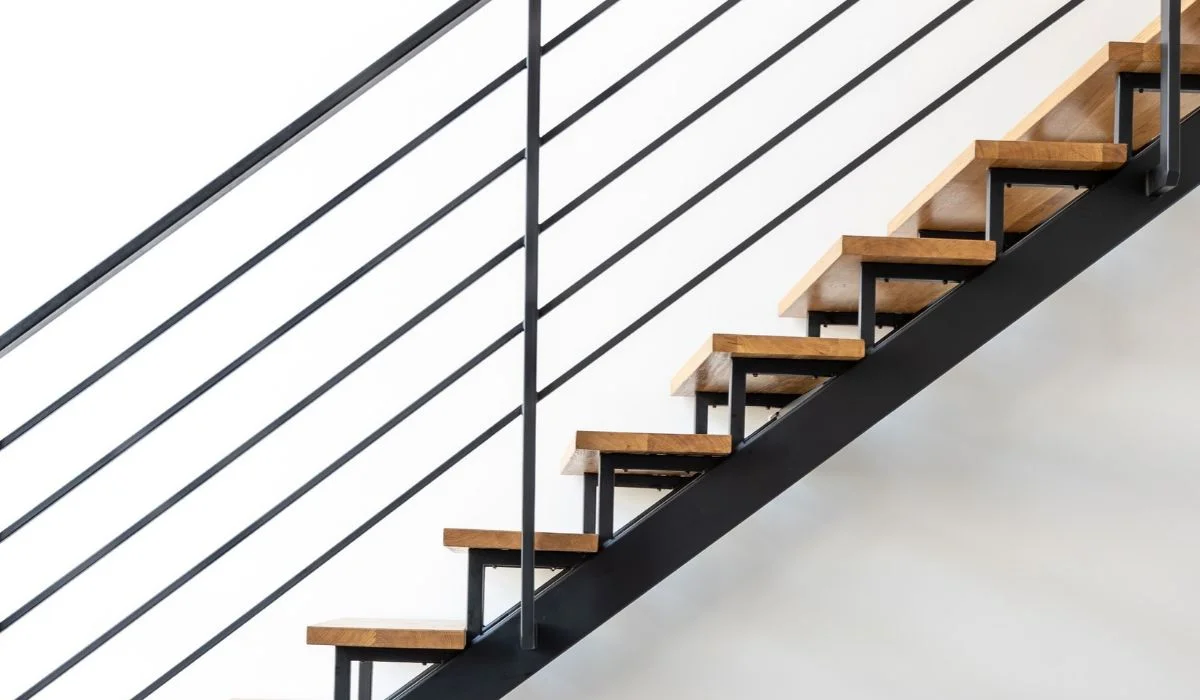
Simple vertical metal bars can create a neat appearance without making the staircase feel visually heavy.
Glass Stair Railings
Glass is often chosen when homeowners want an open and contemporary staircase. Transparent panels allow light and views to pass through, which can help a narrow or darker stair area feel more open.
Glass can be combined with metal posts or a wooden handrail. The combination of wood and glass is particularly useful when you want the staircase to feel modern without becoming too cold.
Glass does require regular cleaning because fingerprints and dust are easily visible. For safety, the appropriate type of glass and fixing system should be selected for the specific installation.
Wrought Iron Railings
Wrought iron can add a decorative and traditional character to a staircase. Curved details, scrollwork, and handcrafted patterns can make the railing a strong visual feature.
This option can work well in classic, vintage, Mediterranean, or more formal interiors. A simpler iron design can also be used in modern homes when combined with clean stair treads and a restrained finish.
Mixed-Material Railings
You do not always have to choose one material.
Wood and metal, wood and glass, or metal and glass can create a balanced staircase design. For example, a wooden handrail can provide a comfortable and warm surface to hold while slim metal balusters provide structure.
Using two materials can also help connect different parts of an interior. The important thing is to give each material a clear purpose instead of using too many finishes at once.
Modern Stair Railing Ideas
A railing can completely change the appearance of an ordinary staircase without requiring the entire staircase to be rebuilt. Several design approaches work well in modern homes.
Slim Vertical Metal Balusters
Vertical bars create a clean rhythm along the staircase. They are simple enough for minimalist interiors but can also work with traditional staircases.
Black or dark metal can create contrast against light walls and wooden steps, while a lighter finish can produce a softer appearance.
Glass With a Wooden Handrail
This combination brings together two very different qualities. Glass keeps the staircase visually open, while wood adds warmth and texture.
It works especially well in homes with open-plan living areas where you do not want the staircase to block light or make the room feel crowded.
Simple Wall-Mounted Handrail
Not every staircase needs a large railing system. When one side of the staircase is next to a wall, a simple handrail can provide support while keeping the design minimal.
This approach is particularly useful for narrow staircases where bulky posts or decorative balusters could make the space feel smaller.
Geometric Metal Designs
Square patterns, vertical lines, and other geometric forms can turn the railing into a decorative feature. The design should still leave enough open space for the staircase to feel comfortable and uncluttered.
Cable Railings
Cable systems use thin horizontal cables between structural posts. They can create a lightweight appearance and preserve views through an open staircase.
However, the suitability of cable or horizontal designs depends on the home, users, local requirements, and spacing. Homes with young children may need additional consideration when selecting an open railing design.
How to Choose the Right Stair Railing
Choosing a railing becomes easier when you consider the staircase and the people who will use it.
Consider the Staircase Size
A large decorative railing may look attractive in a spacious staircase but overwhelming in a narrow area. Slim metal or glass can help preserve visual space in smaller stairwells.
Match the Interior Style
The railing should feel connected to the surrounding room. A wooden railing may complement hardwood flooring, while black metal can work well with modern furniture and architectural details.
You do not necessarily need an exact match. Similar materials, colours, or shapes can create enough visual connection.
Think About Maintenance
Different materials require different levels of care. Glass needs frequent cleaning, wood may need refinishing, and painted or coated metal should be checked for scratches or surface damage.
Consider how much time you are willing to spend maintaining the railing before choosing a material.
Focus on Comfort
A beautiful railing is not useful if it is uncomfortable to hold. The handrail should provide a secure grip and should be positioned at an appropriate height for the staircase.
The International Residential Code, for example, specifies a handrail height of 34 to 38 inches for the residential stairways covered by that code. Local building rules can differ, so the requirements applicable to your project should always be checked before installation.
Think About Safety
Avoid designs with sharp edges, unstable connections, or openings that create unnecessary hazards. The railing should be firmly attached and designed for the staircase rather than selected only for its appearance.
Official requirements can vary according to whether the project is residential, commercial, or a workplace. OSHA, for example, has separate requirements for workplace stair rails and handrails.
Stair Railing Ideas for Small Spaces
Small staircases need careful planning because a heavy railing can make the area feel even tighter.
Glass panels can preserve sightlines, while slim vertical metal bars can provide protection without visually filling the staircase.
A wall-mounted handrail is another practical choice when the wall is already available for support. Keeping the design simple can make a small staircase feel cleaner and more spacious.
Light-coloured wood and neutral finishes can also help maintain a bright appearance.
How to Maintain a Stair Railing
Regular maintenance can keep the railing attractive and safe for longer.
Start by removing dust from the handrail and balusters regularly. Use a suitable cleaner for the material rather than applying the same product to wood, glass, and metal.
Check the railing from time to time for loose screws, movement, cracks, damaged finishes, or other signs of wear. Pay particular attention to connections because a railing that looks fine from a distance may still have a loose fixing.
Wooden surfaces may need refinishing as they age. Metal railings should be checked for corrosion or damaged coatings, while glass panels and their fittings should be inspected for damage.
If you notice structural movement or serious damage, professional inspection is safer than attempting a repair without understanding how the system is fixed.
Common Stair Railing Mistakes to Avoid
One common mistake is choosing a railing based only on its appearance. A design may look impressive in a photograph but may not suit the size or structure of your staircase.
Another mistake is ignoring the handrail itself. The handrail needs to be comfortable to grip and positioned appropriately rather than treated as a purely decorative element.
Using too many materials can also make the staircase look busy. If you combine wood, glass, and metal, decide which material should be the main visual feature and let the others support it.
Poor maintenance is another issue. Loose fittings, damaged finishes, or deteriorating materials should not be ignored because the railing is part of the staircase’s safety system.
Can You Update an Existing Stair Railing?
Yes, in many homes, changing the railing can refresh the appearance of a staircase without replacing the entire stair structure.
For example, old wooden balusters may be replaced with slim metal elements, or an outdated railing can be updated with a simpler handrail and new finish.
However, an existing staircase should be assessed before making major changes. The new system needs to work with the stair structure, fixing points, dimensions, and applicable safety requirements.
Final Thoughts
A staircase railing can combine safety, comfort, and interior design in one feature. Wood provides warmth, metal offers strength and clean lines, glass creates an open appearance, and wrought iron can bring decorative character.
The right choice depends on your staircase, home style, maintenance preferences, and the people who use the stairs. Instead of choosing a railing simply because it looks attractive, consider how it will feel to use every day and how well it will work with the rest of your home.
With the right material, proportions, finish, and installation, a staircase can become both a practical part of the house and an attractive design feature.
FAQs
What is the rail of the stairs called?
It is usually called a stair railing or handrail. It provides support and helps improve stair safety.
What is the best material for stair railings?
Wood, metal, glass, and wrought iron are common choices. The best option depends on your home’s style, budget, and maintenance needs.
What is the standard height of a stair handrail?
Many residential codes use a handrail height of around 34 to 38 inches, but local requirements can vary.
Are glass stair railings safe?
Yes, when the correct safety-rated glass and proper installation system are used.
Can I replace an old stair railing?
Yes. An existing railing can often be replaced or updated without rebuilding the entire staircase, depending on its structure.