A trellis can do much more than give climbing plants something to grow on. The right structure can save garden space, support vegetables, create privacy, frame an entrance, add height, and turn an ordinary planting area into a more attractive outdoor feature. Exploring different Garden Trellis Ideas can help you find a design that fits both your plants and your outdoor space.
Whether you have a large backyard, raised beds, patio containers, or a small urban garden, there are plenty of trellis options to explore. Some are simple enough to make with bamboo and twine, while others can become permanent architectural features made from wood or metal.
The key is choosing a structure that matches your plant, available space, garden style, and maintenance needs. In this guide, you’ll discover practical and decorative Garden Trellis Ideas to help you find the right option for your garden.
What Is a Trellis and Why Use One?
A trellis is a vertical framework designed to support climbing or vining plants. It can be made from wood, bamboo, metal, wire, string, mesh, or other suitable materials.
Some plants naturally wrap, twine, or attach themselves to a support, while others need to be loosely tied as they grow. A suitable trellis keeps plants organized and helps direct their growth upward instead of allowing long vines to spread across the ground.
Trellises are useful for both edible and ornamental gardens. Cucumbers, beans, peas, tomatoes, climbing flowers, roses, clematis, and other vines can benefit from appropriate support. Garden Trellis Ideas can also range from simple supports for vegetable beds to decorative structures that add character to a landscape.
Vertical growing can also make better use of limited garden space. Instead of allowing a plant to occupy a large area horizontally, a trellis gives it room to grow upward.
How to Choose the Right Garden Trellis
Choosing a trellis should start with the plant rather than the appearance of the structure. A lightweight support may work perfectly for peas or delicate vines but may not be strong enough for vigorous plants or heavy fruit. The best Garden Trellis Ideas should provide enough strength and support for the plant as it grows.
Think about the plant’s mature size, weight, growth habit, and how it attaches to support. Also consider whether the plant needs frequent pruning or harvesting because easy access can make a significant difference.
The location matters as well. Check sunlight, wind exposure, soil conditions, and available space before installing the trellis. A structure placed against a wall may need different support than a freestanding trellis in an open vegetable bed.
Garden Trellis Ideas
Garden trellises can add vertical interest while giving climbing plants the support they need to grow upward. From simple DIY structures to decorative designs, the right trellis can improve both the function and appearance of your garden.
1. A-Frame Trellis
An A-frame trellis is a practical choice for vegetable gardens. Two panels are joined at the top to create a stable angled structure that provides growing space on both sides.
This design works particularly well for cucumbers, beans, peas, and other climbing vegetables. Because it creates an angled growing surface, it can also make harvesting easier while keeping vines organized.
2. Bamboo and Twine Trellis
Bamboo is an affordable and natural-looking material for simple trellis projects. Several bamboo poles can be arranged into a teepee shape or connected vertically and horizontally to form a climbing frame.
Twine can then be added between the poles to give vines additional points of contact. This option works well for lightweight climbers and vegetable gardens where a simple seasonal structure is preferred.
3. Wall-Mounted Trellis
A wall-mounted trellis is useful when garden space is limited. It can be attached to a suitable wall or fence and used to encourage plants to grow vertically.
This design can also transform a plain wall into a green feature. Leave appropriate space between the structure and wall when necessary so plants have room to grow and the surface remains easier to maintain.
4. Garden Arch Trellis
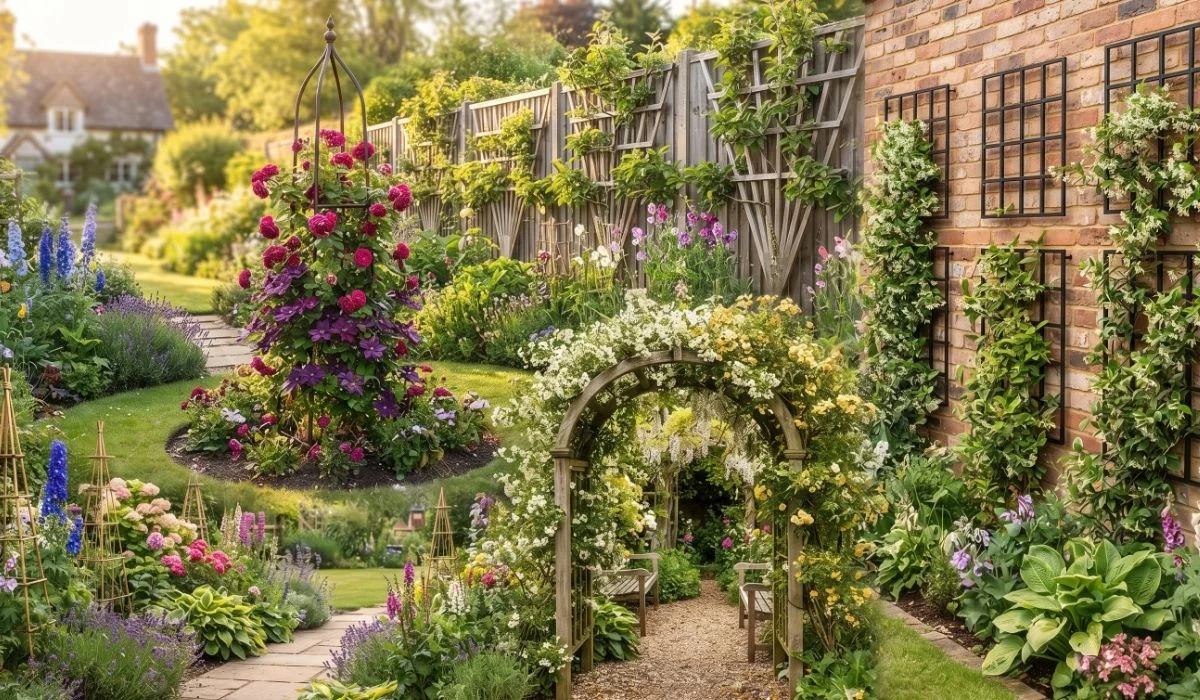
An arch creates both vertical support and a decorative focal point. It can be placed over a pathway, garden entrance, seating area, or transition between different sections of the garden.
Climbing roses, clematis, jasmine, and other suitable flowering plants can gradually cover the structure. Once established, an arch can create a strong sense of depth and make a garden pathway feel more inviting.
5. Obelisk Trellis
An obelisk is a tall, freestanding structure that works particularly well as a feature inside a flower bed or garden border.
Its vertical shape draws the eye upward and provides support for climbing plants. You can use one as a central focal point or place several throughout a larger garden for repetition and structure.
6. Wire or Panel Trellis
Wire panels provide a strong and relatively open support system for vegetables and vines. They can be attached to sturdy posts or incorporated into raised beds.
This type of trellis is particularly useful when you need a functional structure rather than a decorative one. The open design also makes it easier to see and reach plants as they grow.
7. Fan Trellis
A fan-shaped trellis spreads outward from a narrow base, making it useful against walls, fences, or other restricted areas.
It can support flowering vines while adding a decorative shape even before the plant fully covers the structure. Fan trellises are especially useful when you want vertical interest without taking up much ground space.
8. Privacy Trellis
A tall trellis can provide partial screening while still allowing light and air to pass through. Add climbing plants to create a softer alternative to a solid fence.
This approach works well around patios, balconies, seating areas, or neighboring properties where you want additional privacy without making the garden feel completely enclosed.
9. Container Trellis
You do not need a traditional garden bed to use a trellis. A large planter can provide the base for climbing plants while the trellis supplies vertical support.
This is a useful option for patios, balconies, terraces, and small gardens. Make sure the container is stable enough for the plant and structure, and provide proper drainage.
10. Decorative Frame Trellis
An old window frame, picture frame, or similar structure can be converted into a decorative trellis. Wire, mesh, or thin wooden strips can be added to create a climbing surface.
This type of project is particularly suitable for cottage, rustic, or eclectic gardens. It gives an otherwise unused object a new purpose while creating a unique garden feature.
Trellis Ideas for Different Plants
Different plants have different support requirements, so choosing the right structure can make growing easier.
Trellis for Cucumbers
Cucumbers are well suited to vertical growing. A sturdy frame allows vines to climb instead of spreading across the soil.
An A-frame, wire panel, or strong mesh structure can work well. Make sure the support is secure because mature plants can become surprisingly heavy when covered with foliage and fruit.
Trellis for Beans and Peas
Beans and peas naturally climb, making them some of the easiest plants to train on a trellis.
Bamboo, twine, netting, or simple vertical frames can provide enough support. Choose a structure with openings that allow the plants to grip or wrap around the support as they grow.
Trellis for Tomatoes
Tomatoes require a different approach because many varieties do not naturally climb like beans. They may need tying, clips, cages, stakes, or horizontal support systems.
Choose a strong structure that can support the plant as fruit develops. Positioning the support before the plant becomes large can also make training easier.
Trellis for Flowering Vines
Flowering climbers can turn a basic trellis into a colorful garden feature. Roses, clematis, jasmine, sweet peas, and other suitable vines can be trained across arches, walls, fences, or decorative structures.
Before choosing a plant, check its mature size and growth behavior. A vigorous vine may require a much stronger structure than a lightweight seasonal flower.
DIY Trellis Ideas
DIY trellises can be inexpensive and surprisingly simple. Bamboo poles, wooden stakes, wire, twine, branches, and recycled frames can all be adapted into useful plant supports. These Garden Trellis Ideas are especially useful when you want an affordable structure that can be customized to fit your available space.
For a basic project, begin by deciding the height and width required by your plant. Install the main supports securely, then add horizontal or diagonal elements for climbing. The structure should remain stable when the plant becomes mature and heavy.
Another simple approach is a teepee trellis. Place several long poles around a planting area, angle them toward the center, and secure the tops together. This creates a compact structure suitable for climbing vegetables and flowers.
Trellis Ideas for Small Gardens
Vertical gardening is particularly useful when ground space is limited. A trellis can turn a narrow wall, fence, raised bed, or planter into additional growing space. Garden Trellis Ideas for small spaces can help you grow more plants without sacrificing valuable floor space.
For small gardens, avoid oversized structures that dominate the entire area. Slim wall-mounted trellises, fan shapes, compact A-frames, and container supports can provide vertical growing without taking up too much floor space.
You can also combine trellises with raised beds or planters. This allows vegetables or flowers to grow upward while keeping pathways and seating areas clear.
Choosing the Right Trellis Material
The material affects a trellis’s durability, appearance, weight, and maintenance. Choose based on the plant, location, and how long you plan to use it.
| Material | Best For | Main Advantage |
| Wood | Flowers, privacy | Natural look |
| Bamboo | DIY, vegetables | Lightweight and affordable |
| Metal | Heavy vines | Strong and durable |
| Wire/Mesh | Vegetables | Practical and flexible |
| Twine | Seasonal crops | Simple and inexpensive |
Wood suits decorative gardens, while metal works well for permanent or heavy-duty support. Bamboo, wire, mesh, and twine are useful for DIY and vegetable gardens.
Benefits of Using a Garden Trellis
A garden trellis can provide several practical benefits beyond supporting plants.
Better Use of Space
Growing upward allows you to use vertical space that would otherwise remain empty. This is especially valuable in small gardens, raised beds, and container gardens.
Easier Harvesting
When edible plants are trained upward, fruits and vegetables can become easier to see and reach. This can make harvesting more convenient than searching through sprawling vines.
Improved Garden Appearance
Trellises add height and structure to planting beds. Arches, obelisks, decorative panels, and flowering vines can become focal points within the landscape.
Privacy and Screening
A trellis combined with suitable climbing plants can create a natural screen around patios, seating areas, balconies, or boundaries.
Support for Climbing Plants
Some plants need a structure to grow successfully in the desired direction. A well-designed trellis gives them a clear framework and keeps growth more organized.
Expert Insights for Choosing a Trellis
When choosing a trellis, consider how it will perform once the plant reaches full size rather than focusing only on its appearance. The best Garden Trellis Ideas should match the plant’s expected height, weight, and growth habit. Choose a strong enough structure to support mature leaves, flowers, or fruit. For vegetable gardens, place the trellis where watering, pruning, and harvesting remain easy. Permanent structures should be securely installed and protected against wind, while temporary trellises can use lighter materials for easier removal and storage.
Garden Trellis Ideas
Garden trellises can add vertical interest while giving climbing plants the support they need to grow upward. From simple DIY structures to decorative designs, the right trellis can improve both the function and appearance of your garden.
Choosing the Wrong Size
A trellis that is too small may quickly become covered by the plant, while an oversized structure can look out of proportion with the garden.
Choose the size according to the plant’s mature growth rather than its size when purchased.
Using Weak Materials
Heavy vines and fruit require stronger support than delicate flowers. Make sure the frame, posts, connections, and anchoring system can handle the expected load.
Ignoring Plant Growth Habits
Not every climbing plant attaches to support in the same way. Some twine naturally, while others need to be tied or guided.
Research the plant’s growth habit before choosing the structure.
Installing Too Late
Waiting until a vine is large can make training difficult. Install the trellis early enough that the plant can grow into and around the structure naturally.
Blocking Too Much Light
A dense trellis or heavily planted screen can affect nearby plants. Consider sunlight direction and spacing before creating a large vertical wall.
Forgetting Maintenance
Trellises need occasional inspection, especially wooden structures exposed to weather. Check connections, posts, fasteners, and damaged sections regularly.
Future Trends in Garden Trellis Design
Garden trellises are becoming more multifunctional. Instead of serving only as plant supports, they can define outdoor rooms, create privacy, frame pathways, support container gardens, and contribute to the overall landscape design. Modern Garden Trellis Ideas often combine practical plant support with features that improve the appearance and function of outdoor spaces.
Small-space gardening is also encouraging more vertical solutions. Wall systems, compact planters, adjustable trellises, and modular supports can help gardeners make better use of balconies, patios, narrow yards, and raised beds.
There is also growing interest in natural-looking materials and structures that blend into the landscape. Bamboo, wood, branches, wire, and simple metal frameworks can provide support without overpowering the plants themselves.
The most useful designs combine practical plant support with attractive garden structure. These Garden Trellis Ideas can make the trellis valuable both before the plants mature and after they become established.
Conclusion
The best garden trellis ideas combine plant support, smart space use, and attractive garden design. From simple bamboo frames and DIY twine structures to decorative arches, obelisks, privacy screens, and sturdy vegetable supports, there is a trellis solution for almost every type of garden.
Start by identifying the plant you want to grow, then consider its mature size, growth habit, weight, and support requirements. After that, choose a suitable material, location, and structure. The right garden trellis ideas can make it easier to create a functional and attractive growing space.
A well-planned garden trellis can help you grow vertically, organize your planting space, add visual height, create privacy, and make your garden more productive and enjoyable.
FAQs
What is a trellis?
A trellis is a vertical support structure that helps climbing and vining plants grow upward.
What plants grow well on a trellis?
Cucumbers, beans, peas, tomatoes, roses, clematis, jasmine, and many other climbing plants can use trellises.
What is the best material for a garden trellis?
Wood, bamboo, metal, wire, and mesh can all work well depending on the plant, location, and desired durability.
Are DIY trellises difficult to make?
No. Simple trellises can be made with bamboo, wooden stakes, twine, wire, or recycled materials.
What is a good trellis for a small garden?
Wall-mounted, fan, A-frame, and container trellises are useful when ground space is limited.
Can a trellis provide garden privacy?
Yes. A tall trellis with climbing plants can create a natural screen around patios, seating areas, or boundaries.
Do tomatoes need a trellis?
Many tomato varieties benefit from strong support, although the exact system depends on the variety and growing method.
How tall should a garden trellis be?
The ideal height depends on the mature size and growth habit of the plant you want to support.
Can I put a trellis in a planter?
Yes. Trellises can be installed in suitable containers as long as the planter is stable and has enough space for the plant’s roots.
Should a trellis be installed before planting?
Installing it before or early in the plant’s growth usually makes training and supporting the plant easier.